
when the bronx moved:
Boogying, 1972–84
Throughout the ’70s, parallel, funky strands of movement from the West Coast began weaving into The Bronx’s street dance fabric, showcasing the culture’s remarkable flexibility. These dances, popularized on Soul Train and The Gong Show and imported by individual transplants from the West Coast, introduced a robotic, illusion-based vocabulary focused on entertainment and technical precision.
Locking, created by Don Campbellock in Los Angeles, was characterized by its comedic, cartoonish energy—fast “locking” freezes, pointed wrists, and playful, exaggerated steps. Popping, a related but distinct style developed by Bay Area Boogaloo pioneers like Jerry Rente, focused on sharp, rhythmic contractions of the muscles (“hits” or “pops”) to create a strobing, robotic effect.
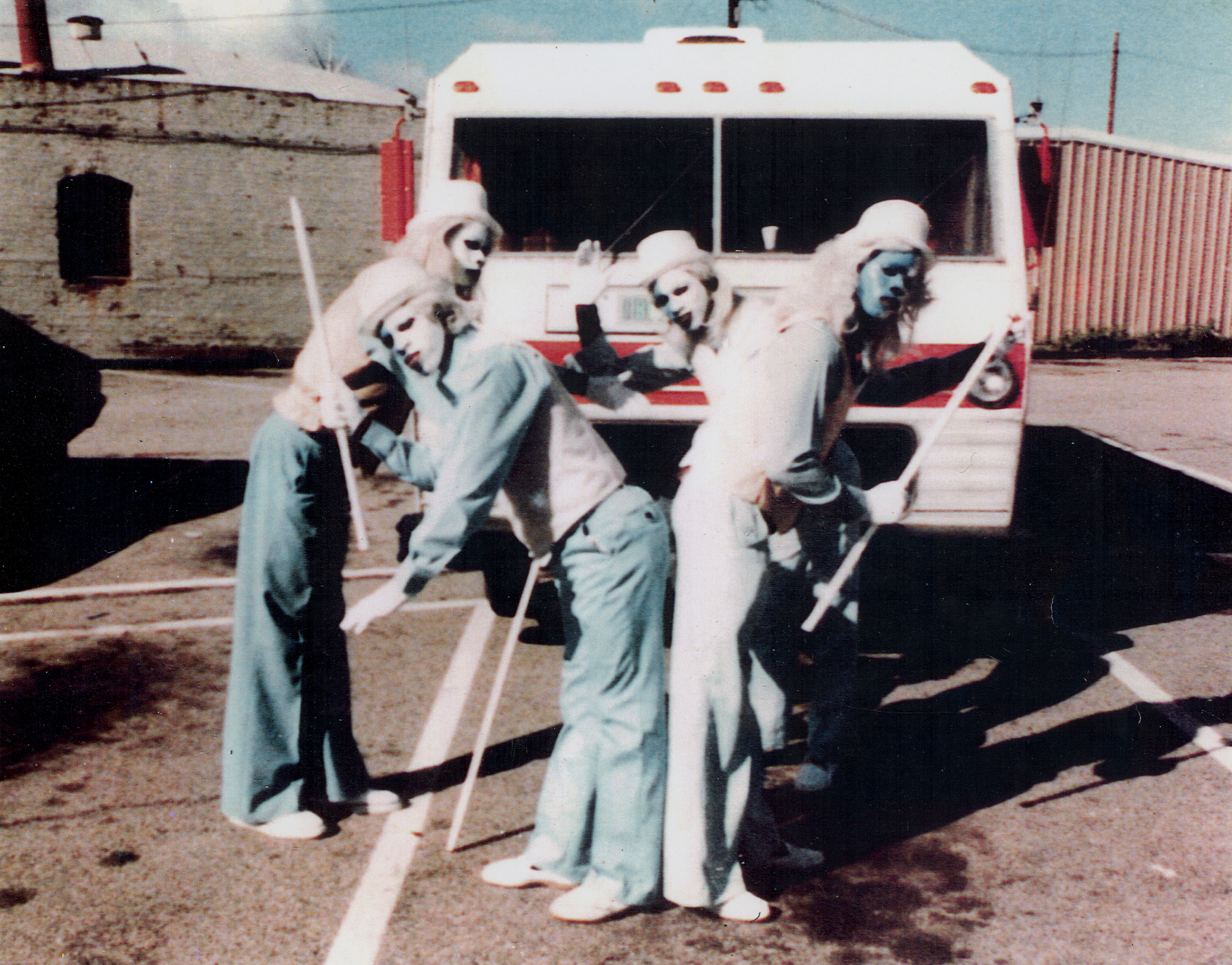
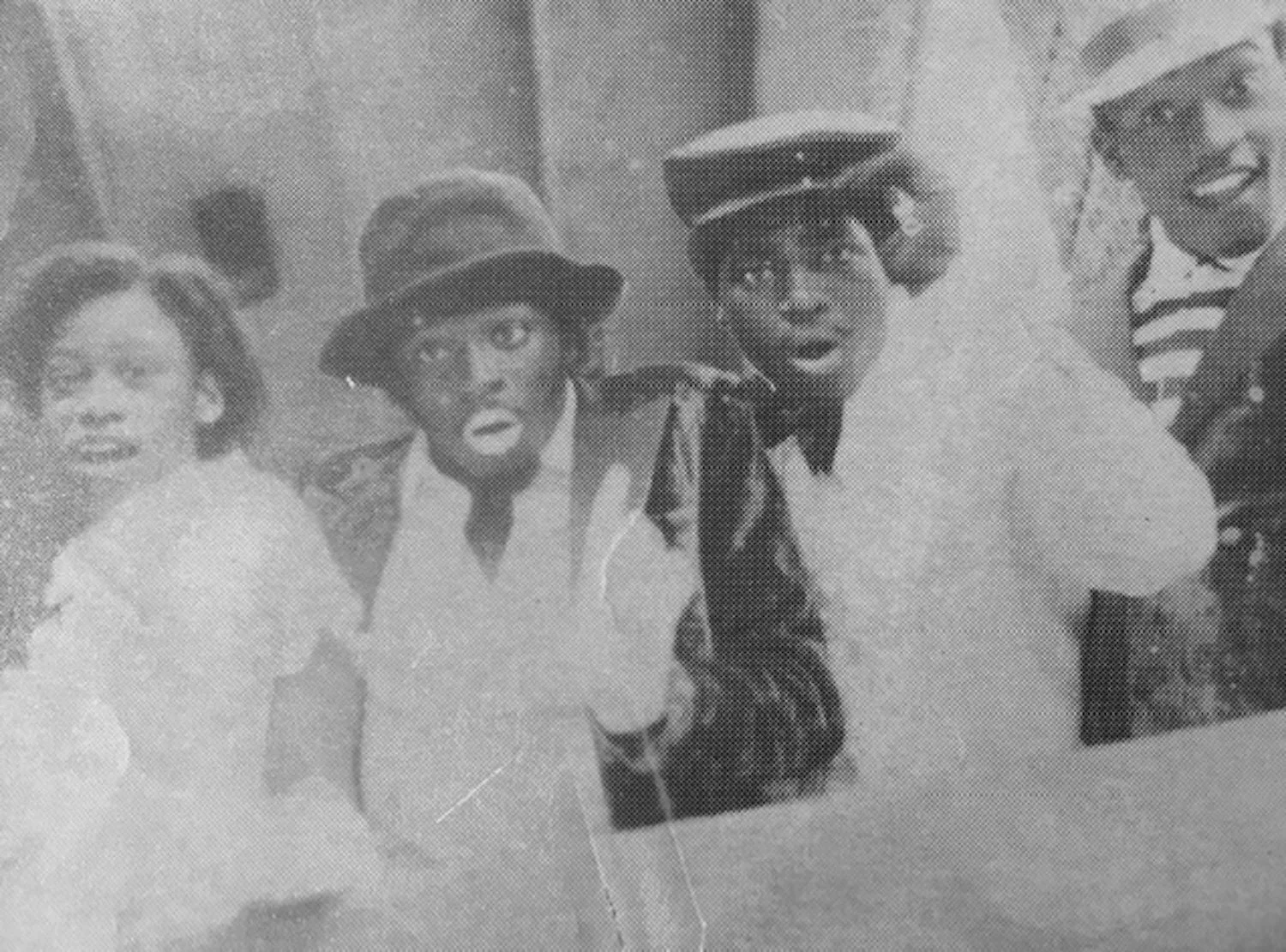
Above: Popping pioneers The Black Messengers outside the set of The Gong Show, which they won, 1977. Courtesy of Chuck Powell.
While not as initially popular in The Bronx, these styles, called here “Boogying,” were eagerly adopted by dancers seeking a different expression. Members of New York crews like the Lockatrons, the Shack Crew, or Realism developed highly personalized styles—for instance, combining Locking with the Robot (Al Boogie), or incorporating elements of tap, mime, and even ballet. Costumes and theatrical skits were central to their performances. This focus on crowd-pleasing spectacle, as opposed to the confrontational burns of other street dances, became a foundational element in broader Bboy culture.
By the peak of the crew era, every respected Breakin’ crew included dedicated Boogie Boys. Their rounds in battles provided crucial contrast and variety, and often the outcome hinged on their creativity and showmanship. The seamless integration of these West Coast forms demonstrated that the Boogie Down Bronx was not an isolated scene, but a dynamic hub capable of absorbing outside influences and remixing them into its own unique, complex dance language.
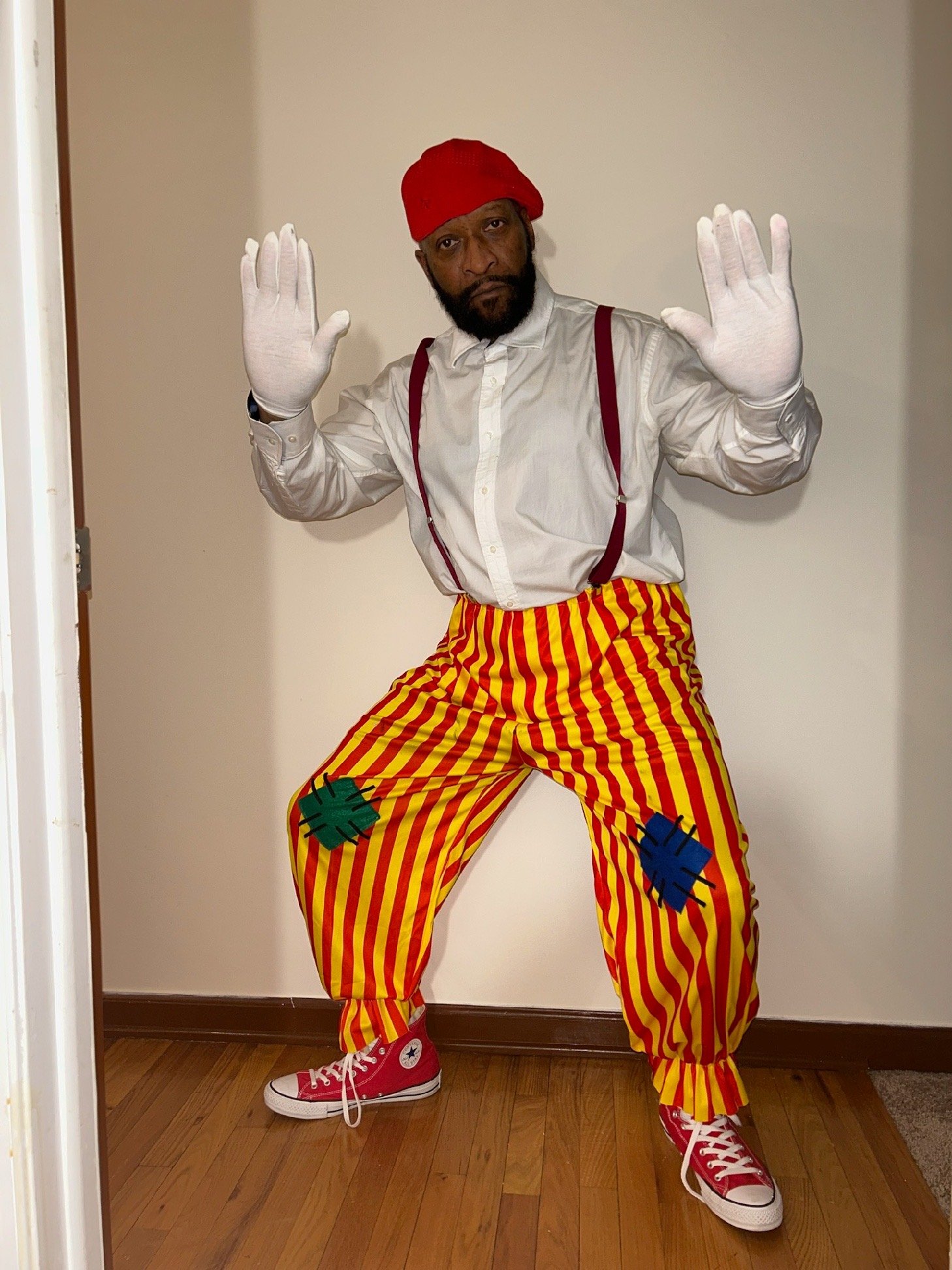
Al Boogie in one of his costumes, 2010s. Courtesy of Al Boogie.
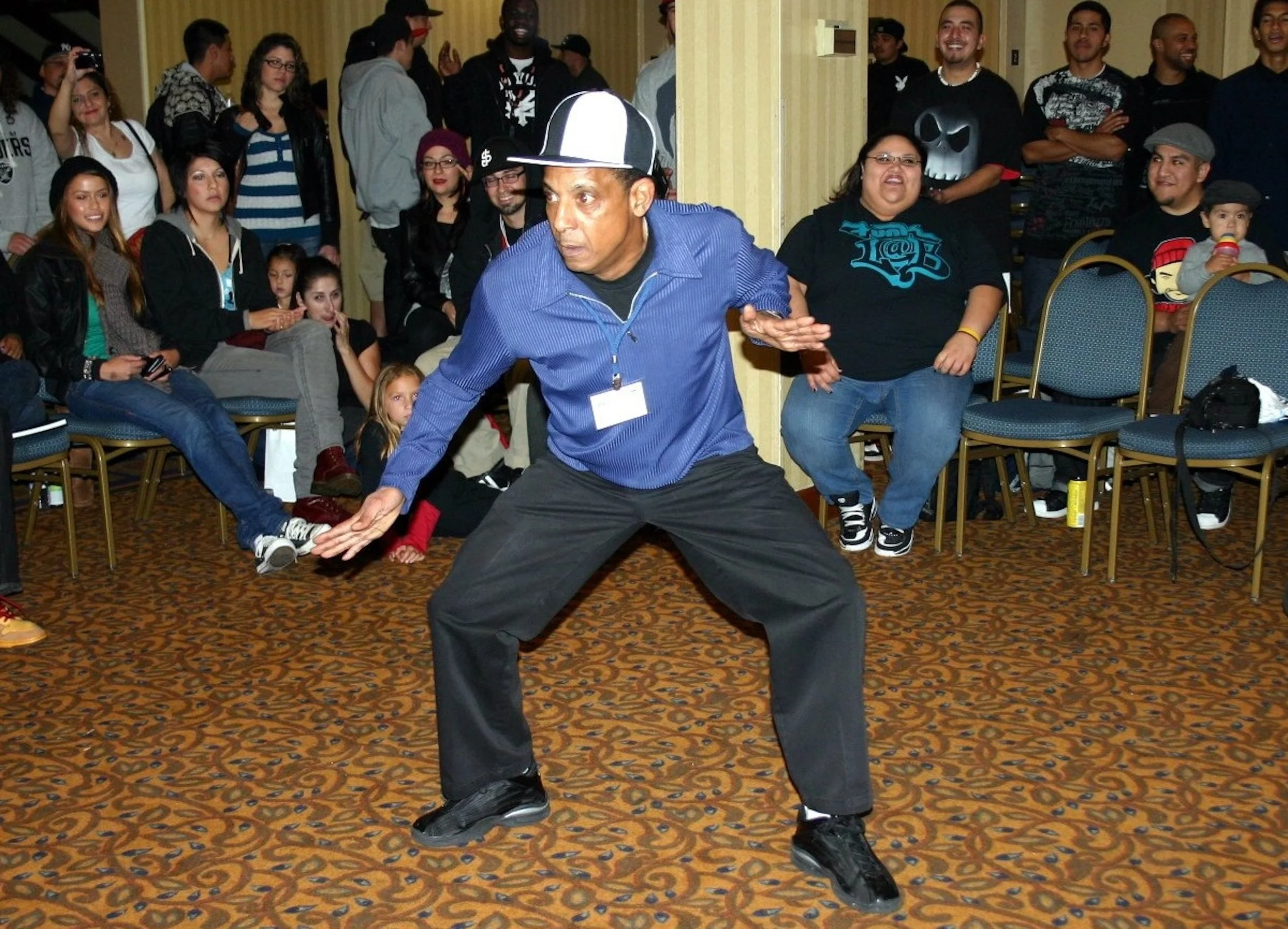
Jerry "The Worm" Rente, pioneer of the West Coast Boogaloo, performing at a conference, 2010s. Courtesy of Jerry Rente.
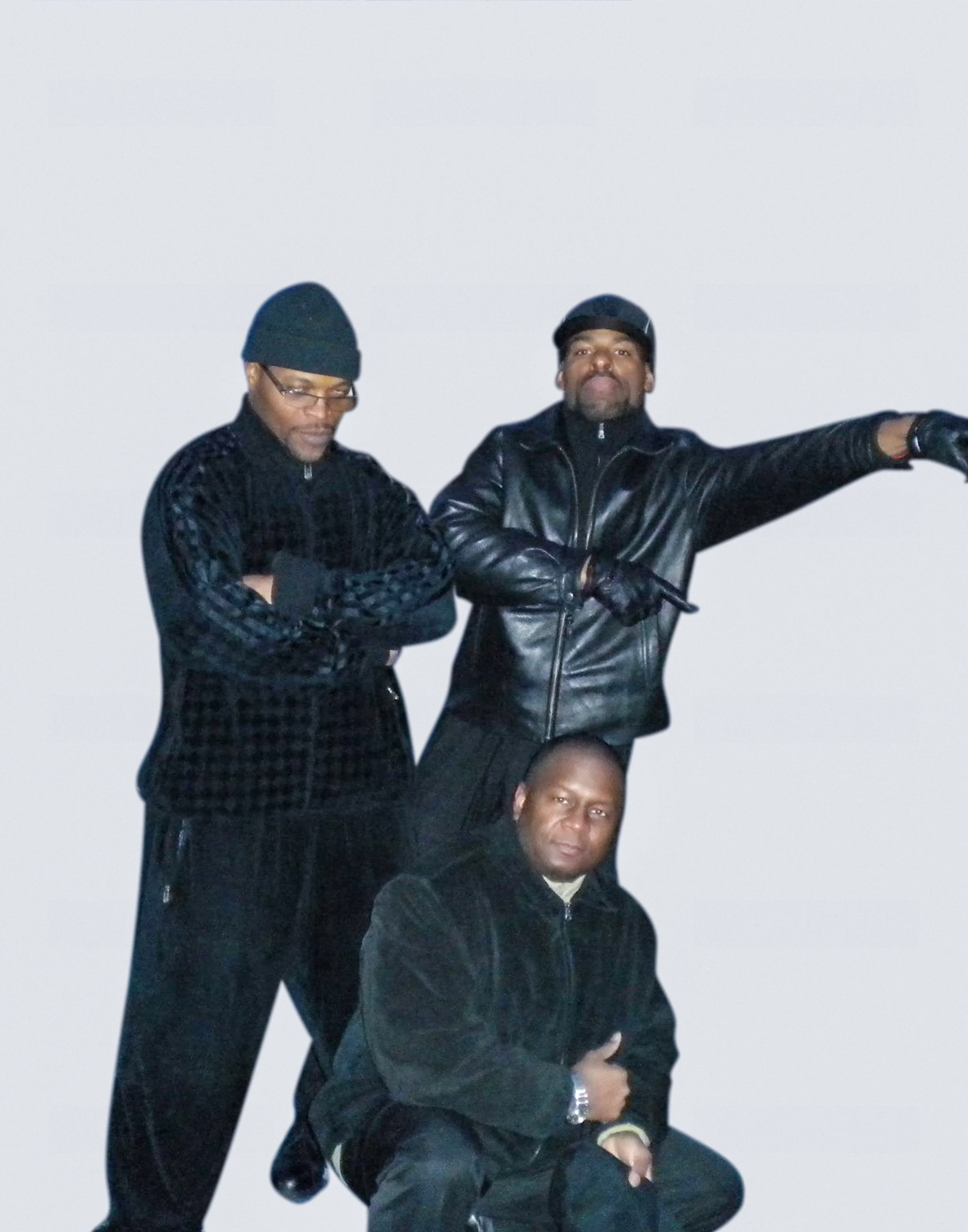
The Lockatrons, including Lockatron John, Dr. Boogie, and Kenneth Wright aka Kez, n.d. Courtesy of Al Boogie.
Realism, one of the earliest crews specializing in Boogying in New York City, 1970s. Courtesy of Al Boogie.
Meet the POPPERs, LOCKERS, and Boogie Boys
A pioneer of New York’s popping scene was The Bronx’s own, Al Boogie started out dancing by following his mom’s slick moves to soul records. He began emulating her and eventually doing his own thing to make her laugh. He caught onto the local dances that came out in the 1970s and ended up leaning towards doing the Robot. He wasn’t into Burning or Bboying but he respected the style. It wasn’t his flavor. He became known for his dancing around the Marble Hill neighborhood and at Kennedy High School.
He was later introduced to Get Loose Bruce in 1978 at a pizza shop near where they both lived. They exchanged moves to see each other’s style. Mutually impressed with each other, from that day forward Al and Bruce became dance partners and longtime friends while pioneering the New York style of popping.
After hooking up with Bruce’s brother Glenn and learning the style of locking, Al began experimenting with a technique he invented called “Lo-Bottin,” where he would perform locking moves while still in the Robot style.
Al Boogie is association with Snap Crackel and Pop (Al Boogie, Loose Bruce, Glenn—The Bronx, 1979); The Shack Crew/The Party Crashers (Harlem, 1980–84); Yogi; Kool Keith aka Scarecrow/Activity, and also part of the Ultra Magnetic M.C.’s and an incredibly prolific independent rapper; Loose Bruce; Jesse; Supreme; Harlem Keith; Locking Mickey; Larry Love; the Harlem Pop Lockers; and the Pop-O-Matics.
Charles “Chuck” Powell started dancing in 1970, and in 1972 he helped create the Black Messengers. The Black Messengers are known for being one of the most influential groups in East Oakland, California. That defined the Boogaloo and Robot styles of the funk dancing that originated in Oakland. These styles are foundational to many styles of dance around the world today. With humble beginnings, their skills were developed at the Tassafaronga Recreation Center in Oakland. The Black Messengers won many talent, twice winning The Gong Show as well as the Raw Raw Show.
Chuck was born in Kansas City but grew up in Oakland. That’s where he learned to dance. He acknowledges Exotic Movements and Patricia Sott for letting him join her group, the first that he danced with.
Boogaloo Vic was born in 1965 and is from Oakland, California. As a very young kid Vic grew up dancing Boogaloo alongside his older cousins. Transitioning through the sounds of 70s R&B, Funk, and Disco music, Vic’s dancing eventually evolved into what's known today as Poppin’ in 1976–1984. When he started Poppin’, there were only a handful of others dancing similarly. They evolved the dance out of Black Boogaloo street culture, before Popping was popularized on television and in movies. Popping spread from Oakland, gaining momentum in other California cities like Hayward, Berkeley, Fremont, Newark, Milpitas, and San Jose. At that time, Poppin’ was the umbrella term, even though the dance was not yet standardized.
John Christian, better known as “Lockatron John,” is originally from Laurinburg, North Carolina. John began learning the art of dance in the early 70s, and his family was well-entrenched in music and dance from the 60s and 70s. When he moved to New York, John started a dance group that came to be known as the Lockatrons.
John has preformed on and off Broadway and traveled to numerous countries. He later worked with other dancers to combine breakin’, jazz, tap, ballet, magic, locking, popping, Capoeira, as well as other dance styles, creating something unique and visually appealing to dance audiences of New York and abroad. He presently works for a fortune 500 company and continues to speak about the positive influence of dance.
One of the first dancers that Supreme (a Boogie Boy) met was Yogi. As Supreme remembers, Yogi had a strange-sounding voice, like a robot or a computer, but he was funny—really fully—plus he had many brothers: John, Rod, Mackey. Supreme also would like to acknowledge the influence of Al Boogie, Ski Rock, Baybay, Trent, Jamie, Robbie, Lal, Keith, Kevin, Nuke, Red Alert, Jason, Travis, Lenny, Boo, Johnathan, Lester, Nuke, Bobby, Norma, the Twins, Don and Angel, Sonny, Ronald, Richard, Steve, Willie, Big Willie, Ms. Byrd and Mr. Byrd, Ms. Lizie (“Old Lady”), Rome, Odie, Tracy, Tyrone, Natural, Quinn, Darren, Jessie, Harlem Keith, Freddy, Donald Bess, Ronald Bess, Victor, Black, Troy, Droopy, and Devon.
Brooklyn Street Dancers (B.S.D.) was established in 1980 and consisted of a energetic group of Breakers and Poppers representing all sections of Brooklyn, New York. Although originally housed at the Clinton Hill Youth center on Waverly Avenue, B.S.D. had several rehearsal spaces known as home, like the Hanson Place Church and The Historic New Muse. During the mid-80s, after the emergence of Art Scott's FRESH magazine the group was renamed “The Fresh Generation” by Scott, the group’s manager. Some of the members included Rook, Mabusha “Push” (from 88 Hip Hop), Cooper, Alex, Criss Cross Dennis, Otty, Donald “Share” Bell, Merissa Gant, Chino, Winnie, Inf-du aka Infinite, Chase, Kevin McNeil, Lil Mo, Dre, Chico (Chic Delvic of Junior Mafia), Tray, Gladys Poppy Perez, James Ross, John “Animal” Ayala, Franky Swift, Speedy E, Teena Fleming, Chase, Gibran Brown, Malik Cumbo, Hitman Slade (Junior Mafia), Jo Cool, and more.
Julio “Boogie Down Klown” Santiago was born in the Lower East Side and raised in The Bronx. He was inspired to dance by his older brother Alex Santiago, a popular Hustle style dancer in The Bronx during the ’70s and ’80s. Klown’s first encounter with the Electric Boogie was in 1980, when a friend of his brother Alex introduced them both to the Moonwalk. Klown was hooked from that very minute and eventually mastered the Moonwalk and other Electric Boogie movements. Klown, with his new “skillz” in street dance, frequently attended school yard jams where he met some top Electric Boogie Boys who taught and mentored him. Klown became popular in his community for his unique battle style, which became his signature within the dance community, and as a professional performer for over four decades. His professional dance career began on the streets of Times Square and has grown to global success in film, theater, sporting events, and more. Today, Klown is still active as a mentor, youth street dance instructor, and MC for dance competitions and sporting events.
Thelma Davis Martin was an original Soul Train dancer whose journey on the iconic show spanned from 1971 to 1983. Her impressive career includes performing as a background dancer for Diana Ross and Michael Jackson's television special, and dancing in the Chase Comedy Muscular Dystrophy Special in Las Vegas. Thelma appeared as an ensemble dancer on hit television series including Fame and A Different World, and graced the screen in numerous films such as Shaft's Big Score! (1972), Cooley High (1975), Harlem Nights (1989), and Poetic Justice (1993). Her music video credits are legendary, including Michael Jackson's Thriller (1982), Lionel Richie's All Night Long, and Kurtis Blow's The Breaks. Thelma also performed internationally, dancing with James Brown in London and Tokyo, and with Stevie Wonder in Osaka, Japan. Beyond her performing career, she choreographed and produced dance productions in Japan, trained dance instructors, and managed studios in both Japan and Korea. Today, Thelma continues to contribute to her community as a LAUSD librarian and serves on the Board of Directors of the Leimert Park Theater Consortium, while still making recent appearances, including as a featured dancer in Kamasi Washington's 2023 project and BET's 2024 celebration of Soul Train dancers.
Wanda Fuller-Robinson is a celebrated original Soul Train dancer and choreographer whose passion for dance was sparked before she even started grade school, inspired by her father, a professional musician. As a young prodigy, Wanda's natural leadership emerged early as she choreographed for youth groups and neighborhood talent shows. Her career reached new heights when she successfully auditioned for Soul Train alongside dance partner Eddie Cole, and the duo became iconic fixtures seen together across most episodes, cementing their place in Black pop culture history. Following her tenure on Soul Train, Wanda formed the multifaceted music and dance group Somethin' Special, traveling the globe and sharing stages with music royalty including Aretha Franklin, Diana Ross, Tom Jones, Chaka Khan, James Brown, and Natalie Cole. She also danced alongside acclaimed recording artist Gwen Brisco under the management of industry veteran John Daniels. Today, Wanda resides in Florida, where she remains a devoted wife and mother of two daughters. Though she has stepped away from relentless touring, her passion for movement endures—she still enjoys dancing and celebrating dance artistry, inspiring new generations by preserving the authentic spirit of an era that forever changed American culture.
Linda Sims is a versatile dancer whose career spans from the Soul Train stage to praise and worship ministry. She joined the Soul Train family from 1976 to 1980, showcasing her talents in freestyle and couple dancing under the legendary Don Cornelius. Linda's dance expertise extends far beyond Soul Train—she is a skilled couple dancer specializing in West Coast and East Coast Swing, Hustle, Salsa, and Cha Cha, and she is equally known as a freestyle dancer "out on the floor." Since 2015, Linda has devoted her talents to praise and worship dancing at West Angeles Church of God in Christ in Los Angeles. She has also been an integral part of "The History of Black Dance in America" productions from 2012 to 2015, working alongside Ron Parker and Chester Whitmore to preserve and celebrate Black dance heritage. Linda continues to dance and mentor others in couple dancing, having studied under mentor Paul Thornhill since 2004. She holds an AA Degree in Liberal Arts.
Yolanda Toussaint was an original Soul Train dancer from 1971 to 1976, dancing alongside her partner Joseph "Lil Joe" Chism. One of her most unforgettable moments came when Marvin Gaye pulled her from the crowd of dancers during his performance of "Let's Get It On"—a moment of pure awe that she embraced by placing a kiss on Marvin's right cheek. Despite her shyness during her Soul Train days, Yolanda seized that rare opportunity to connect with the legendary artist. Her legacy as an original Soul Train dancer is now permanently preserved in history—a photograph of Yolanda and Lil Joe dancing down the Soul Train line is displayed in the Smithsonian National Museum of African American History and Culture in Washington, D.C. She has also been featured in Stephen McMillian's book "Get on Board," released in 2026, sharing her firsthand account of the Soul Train era. Yolanda remains a proud representative of the original Soul Train dancers whose contributions to Black dance and culture continue to be celebrated and honored.
Jimmy "Scoo B Doo" Foster is a legendary street dance pioneer and the first student of Locking creator Don Campbell. After learning the "Campbellock" at Los Angeles's Maverick's Flat in 1970, Jimmy revolutionized the style by creating foundational steps still used today—including the Scoo B Doo, Scoo B Walk, Scoo Bot, and the DJ Stop and Go. As a prominent face and celebrated member of the Soul Train Gang starting in 1971—made possible by the talented Damita Joe Freeman—Jimmy famously opened for the Godfather of Soul, James Brown, at The Forum in Los Angeles. During this era, Jimmy shared his apartment with four dancers, mentoring his roommates and teaching them his signature steps—dancers who would later go on to form the iconic group The Lockers, though Jimmy himself was not a member. His historic performance career includes a legendary run at the Apollo Theater with The Whispers, followed by a massive one-year world tour with Tom Jones as a member of the elite dance group Somethin' Special. After their run with Jones, the group spent another five successful years touring and entertaining global audiences on their own. Now based in Orlando, Florida, Jimmy Scoo B Doo travels the world as a master educator and judge, passing down his invaluable knowledge to the next generation of dancers.