
Calendar of Events
-
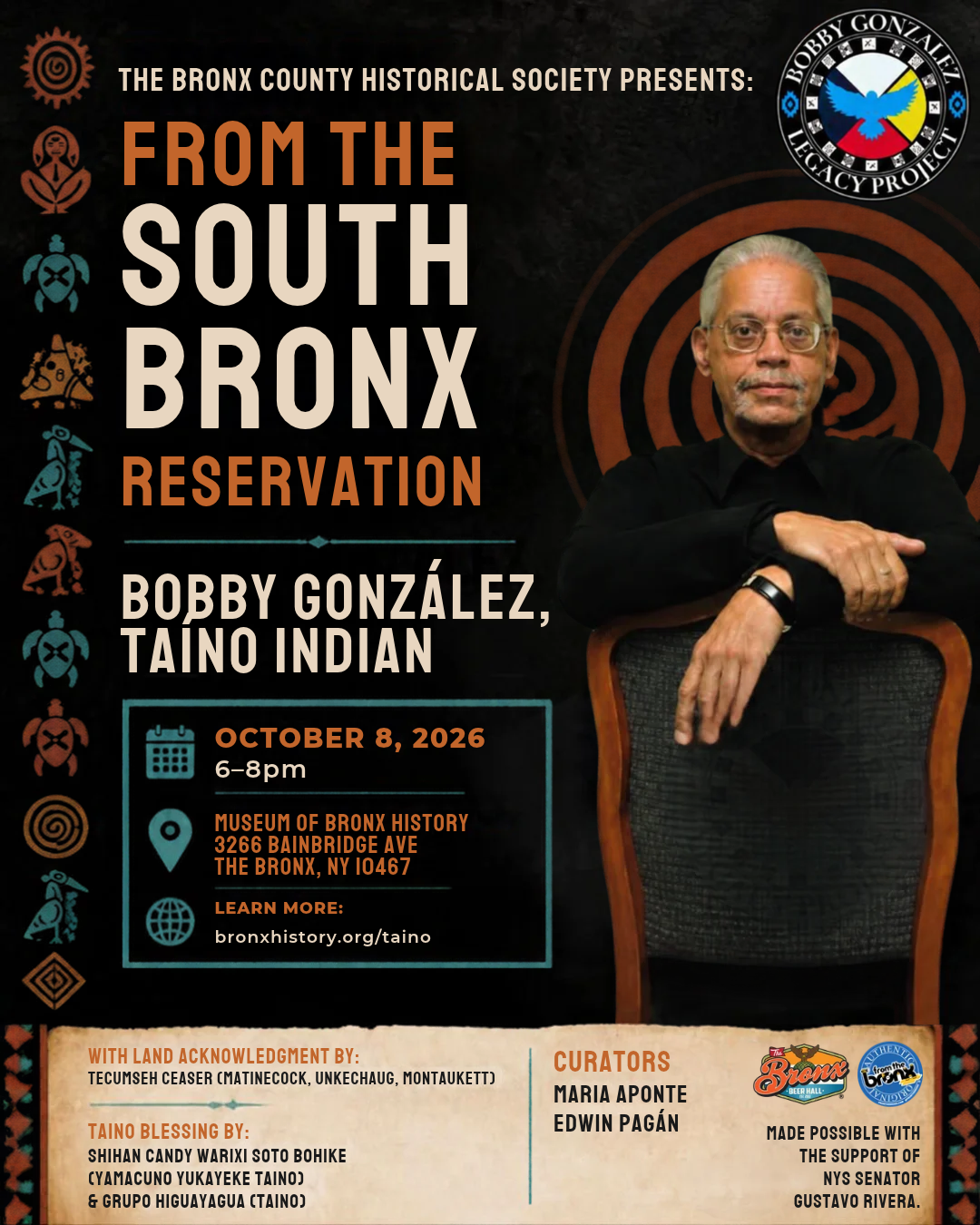
![from the south bronx reservation opening flyer]()
From the South Bronx Reservation Opening Reception
Thursday, October 8, 2026, 6:00pm
Museum of Bronx History
3266 Bainbridge Ave., The Bronx, NY 10467
Join BCHS, the Bobby González Legacy Project, From The Bronx, and The Bronx Beer Hall for the grand opening of “From The South Bronx Reservation,” an exhibit curated by Edwin Pagán and Maria Aponte highlighting late twentieth-century Native American revival movements in The Bronx through the life of the late Bobby González, Bronx-born Taíno historian, poet, and educator. The exhibit will showcase Bobby’s personal history and artifacts as a lens for exploring the persistence, flourishing, and intermingling of indigenous cultures from North and South America in The Bronx today. The opening will include contributions by Tecumseh Ceaser (Matinecock, Unkechaug, Montaukett), Shihan Candy Warixi Soto Bohike (Yamacuno Yukayeke Taino), and Grupo Higuayagua (Taino).
Made possible by New York State Senator Gustavo Rivera.
About the Exhibit
Bobby González (1951–2023) was a Taíno and Puerto Rican storyteller, poet, and lecturer who grew up in the South Bronx. For nearly four decades, he spoke about Indigenous history at schools, colleges, and museums in 48 states. He co-founded the Taíno cultural group Taíno del Norte, organized the Bronx Native American Festival, and wrote several books, including The Last Puerto Rican Indian.
In a short prose piece, Bobby listed the people who passed through his family’s bodega at 154th Street and Courtlandt Avenue: Cherokee, Maya, Mohawk, Quechua, Garífuna, Lenape, Taíno. Most customers, he wrote, were counted as “Hispanic,” and few knew their own Indigenous ancestry. “They might have been detribalized and Hispanicized, but they were still Indian.” He called the neighborhood the South Bronx Reservation.
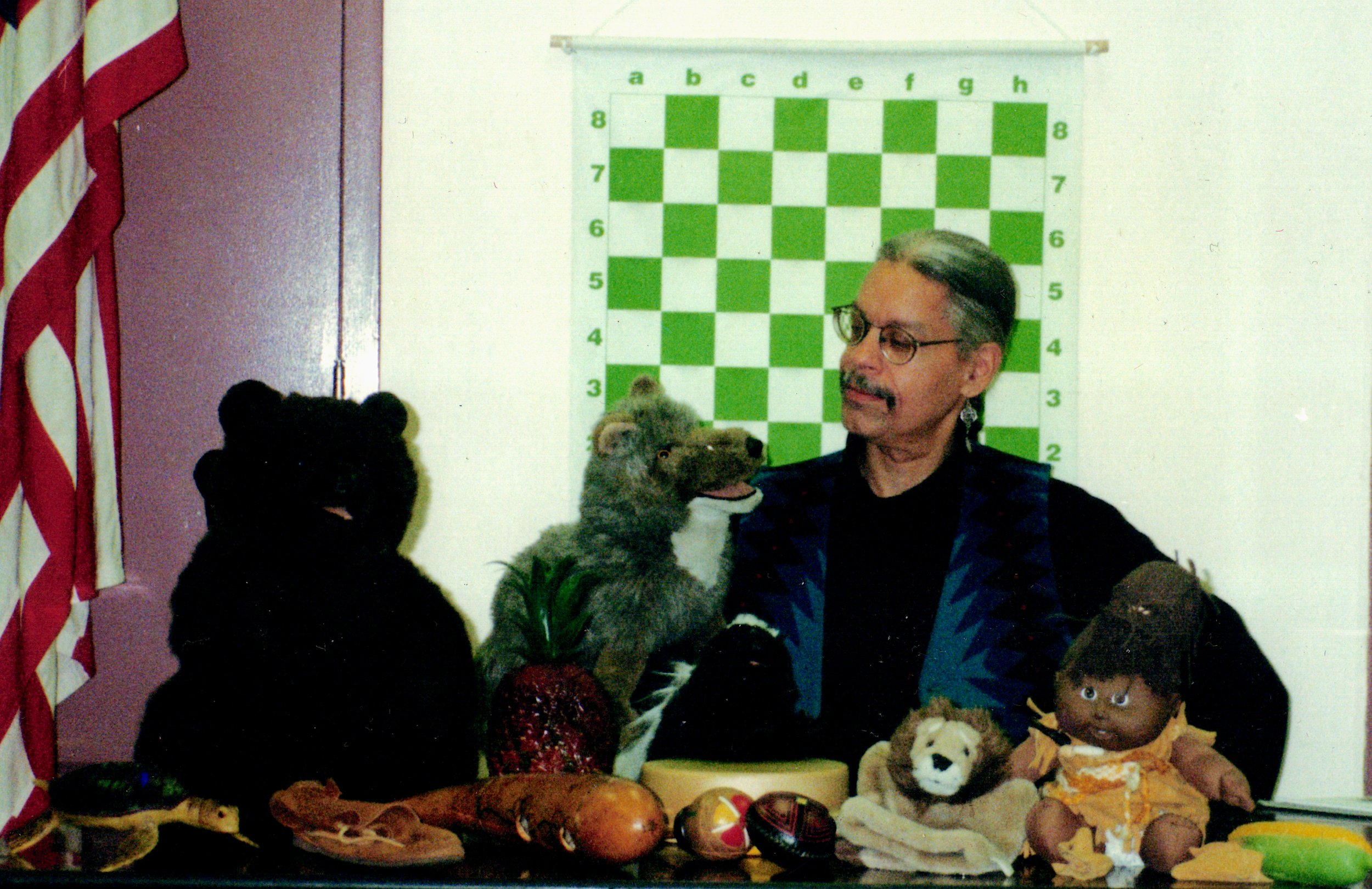
Above: Bobby with some of the puppets and instruments he would use as for Indigenous storytelling, n.d. Courtesy of Maria Aponte-González.
This exhibit uses Bobby’s life and work to tell a larger story. The Taíno, the Indigenous people of Puerto Rico and the Caribbean, were declared extinct in colonial records and, later, in American textbooks. Yet Taíno ancestry, language, and knowledge survived inside Caribbean families. In the late twentieth century, Taíno people in The Bronx and New York began reclaiming that identity publicly, and Bobby was a central part of that movement.
The Bronx was where he learned this history and where he chose to tell it. The objects here come from his home, loaned by his widow, Maria Aponte-González, founder of the Bobby González Legacy Project and an accomplished poet and educator herself.
en español
Sobre la exposición
Bobby González (1951–2023) fue un narrador, poeta y conferenciante taíno y puertorriqueño que creció en el South Bronx. Durante casi cuatro décadas, habló sobre historia indígena en escuelas, universidades y museos de 48 estados. Cofundó el grupo cultural taíno Taíno del Norte, organizó el Festival de Nativos Americanos del Bronx y escribió varios libros, entre ellos The Last Puerto Rican Indian. En un breve texto en prosa, Bobby enumeró a las personas que pasaban por la bodega de su familia, situada en la calle 154 y la avenida Courtlandt: cheroquis, mayas, mohawks, quechuas, garífunas, lenapes y taínos. La mayoría de los clientes, escribió, eran clasificados como «hispanos», y pocos conocían su propia ascendencia indígena. «Podían haber sido destribalizados e hispanizados, pero seguían siendo indígenas». Él llamaba al barrio la «Reserva del South Bronx».
Arriba: Bobby con algunos de los títeres e instrumentos que utilizaba para la narración de historias indígenas; fecha desconocida. Cortesía de Maria Aponte-González.
Esta exposición utiliza la vida y la obra de Bobby para narrar una historia de mayor alcance. Los taínos—el pueblo indígena de Puerto Rico y el Caribe—fueron declarados extintos en los registros coloniales y, más tarde, en los libros de texto estadounidenses. Sin embargo, la ascendencia, la lengua y los conocimientos taínos perduraron en el seno de las familias caribeñas.
A finales del siglo XX, los taínos del Bronx y de Nueva York comenzaron a reivindicar públicamente esa identidad, y Bobby desempeñó un papel fundamental en dicho movimiento. Fue en el Bronx donde él conoció esta historia y donde decidió contarla. Los objetos aquí expuestos proceden de su hogar y han sido cedidos por su viuda, Maria Aponte-González, fundadora del Bobby González Legacy Project y destacada poeta y educadora.
Historias de bodega: una vida en el sur del Bronx
Los padres de Bobby, Gloria Camacho de Ponce y Santos González de Juncos, llegaron de Puerto Rico a Nueva York a finales de la década de 1940. Bobby nació en Manhattan en 1951, y al año siguiente la familia se mudó a las viviendas Melrose Houses en el sur del Bronx. Asistió a la escuela St. Adalbert y se graduó de la preparatoria Cardinal Hayes en 1969.
Sus padres le enseñaron que la familia era indígena. En Acción de Gracias, hablaban de 1492 en lugar de ver fútbol americano. «Me contaron que muchos de los nuestros, para sobrevivir, negaron ser indígenas, y después de varias generaciones, muchos de los nuestros lo olvidaron». En la escuela, Colón era presentado como un héroe, con apenas una mención a los taínos, quienes fueron esclavizados, asesinados y desplazados. Bobby recuerda haberse sentido confundido y luego enojado.
En la década de 1970, su padre abrió una bodega frente a las viviendas Melrose Houses. Su nombre, «El Omnipotente», rendía homenaje al Gran Espíritu de los taínos. Su madre, a quien Bobby describía como «curandera» o sanadora tradicional, aconsejaba a los vecinos en la trastienda. Un cuaderno de notas situado junto a la caja registraba las compras hechas «a crédito». Durante el apagón de 1977, un familiar apuntó los faros de un automóvil hacia el escaparate para que la tienda pudiera seguir vendiendo velas y pilas.
Bobby pasó más de veinte años tras aquel mostrador, escuchando. «Cuando estás detrás del mostrador, eres la estrella. La gente viene y tú, literalmente, llevas las riendas». Las historias del vecindario se convirtieron en la materia prima de su poesía y su narrativa.
«Me dijeron que muchos de los nuestros, para sobrevivir, negaban ser indígenas y que, tras varias generaciones, muchos de los nuestros lo olvidaron».
¿Quiénes son los taínos?
Los taínos son el pueblo indígena de las Antillas Mayores, incluidas Borikén (Puerto Rico), Kiskeya (La Española) y Cuba. Fueron los primeros en enfrentarse a la conquista española tras 1492. Después de la conquista, tal como escribe la antropóloga Dra. Christina M. González, los taínos fueron «descartados y considerados el paradigma mundial del pueblo nativo extinto».
Sin embargo, el pueblo y los conocimientos taínos sobrevivieron. Perduraron en palabras como «huracán»—término que nombraba la furia de Guabancex, el espíritu de la tormenta—, en las hamacas tejidas con fibra de maguey, en la yuca y el casabe, así como en los saberes sobre agricultura y pesca. Gran parte de este legado fue transmitido por las abuelas. Por ejemplo, algunas personas aún recuerdan haber aprendido de sus bisabuelos en Puerto Rico que, al recolectar una planta, «siempre hay que devolver algo a cambio».
A menudo, la supervivencia exigía silencio. Una mujer dominicana le dijo al investigador Jorge Baracutei Estévez: «Mi padre siempre decía que descendemos de los indios, pero es difícil decir esas cosas aquí». Estévez recordaba haber sido objeto de burlas cuando era niño por afirmar que era taíno.
Desde entonces, la ciencia ha confirmado la memoria familiar. Un estudio de 2018, basado en el ADN de un diente de hace mil años hallado en las Bahamas, demostró que los habitantes actuales del Caribe poseen ascendencia específicamente taína.
Bobby llevó esta historia por todo el país. «Puede que les hayan dicho que los taínos se extinguieron, pero eso es falso. Somos demasiado difíciles de borrar», dijo a unos estudiantes de Michigan en 2002. Su conferencia «Rojo, negro y marrón» (Red, Black and Brown) repasaba siglos de intercambio entre taínos y africanos, describiendo su encuentro como «un reencuentro de parientes perdidos».
Lecturas adicionales: Christina M. González, «Abuelas, Ancestors, Atabey: The Spirit of Taíno Resurgence», y Jorge Baracutei Estevez, «Agua Dulce in Kiskeya: Tobacco, Casabe, Water and Stone», revista American Indian, Museo Nacional del Indígena Americano, otoño de 2018.
los taínos nuyorriqueños
El despertar de Bobby comenzó en el Manhattan College, en el Bronx, cuando un amigo lo llevó a un powwow. Allí conoció a indígenas de todo el hemisferio. «Muchas personas que mi familia conocía, amigos, eran nativos americanos pero no tenían conciencia de serlo». Dejó la universidad, viajó con compañeros indígenas y, a mediados de la década de 1980, comenzó a narrar historias, empezando en el Museo del Indio Americano. A principios de la década de 1990, Bobby y el artista y poeta Machisté Quintana fundaron Taíno del Norte para rescatar y revivir tradiciones taínas «que estaban ocultas y se atribuían a otras culturas». Quintana, quien pasó décadas trabajando en la elaboración de un diccionario taíno, instaba a «cuestionar constantemente la palabra escrita», ya que los cronistas de la conquista «vinieron a conquistar, no a aprender». Él acuñó la declaración del movimiento: Guakia Taíno, Guakia Yahabó, que significa «Somos taínos y todavía estamos aquí». El resurgimiento taíno a mayor escala cobró fuerza en torno al quinto centenario de la llegada de Colón, en 1992. Fue impulsado en gran medida por puertorriqueños, dominicanos y cubanos de la diáspora. Dado que los académicos no indígenas seguían aceptando el mito de la extinción, muchos tuvieron que convertirse en sus propios investigadores. En 1996, mientras Bobby ejercía como escritor residente en Van Cortlandt Park, el Consejo de las Artes del Bronx señaló que el Bronx era el único distrito de la ciudad que no contaba con un festival indígena o un powwow. Bobby organizó uno. El Festival de la Cosecha Nativa (Native Harvest Festival) comenzó en 1997 y evolucionó hasta convertirse en el Festival de Nativos Americanos del Bronx, que actualmente se celebra cada mes de septiembre en Pelham Bay Park. Su propósito, según afirmó, era «tender puentes entre las comunidades indígenas y las no indígenas; puentes de entendimiento».
«Guakia Taíno, Guakia Yahabó. We are Taíno, and we are still here.»
Déjame contarte una historia
Bobby prefería que lo llamaran narrador de historias en lugar de conferenciante. Sus charlas, con títulos como «Día de Colón: Reflexión sobre las trágicas consecuencias de 1492», llegaron a universidades, museos, bibliotecas y centros comunitarios de 48 estados. Él mismo se describía como «un vendedor ambulante... que vende un mensaje: nuestras diferencias hacen que la vida sea más maravillosa e interesante».
Sus charlas podían transformar la forma en que los oyentes se percibían a sí mismos. En 1999, en la Universidad de Michigan-Flint, un hombre mexicoestadounidense se puso en pie al finalizar la sesión; dijo que, por primera vez en su vida, sentía que podía definirse como indígena en lugar de español.
Bobby no suavizaba la historia, pero tampoco exigía que todos estuvieran de acuerdo con él. «Puede que la verdad para mí no sea la verdad para ti. Hemos tenido experiencias culturales e históricas diferentes, y debemos respetarlo».
También era poeta escénico. Recitó sus obras en el Nuyorican Poets Café y en el Museo Nacional del Indígena Americano. Organizó un festival de poesía nativa americana, condujo sesiones de micrófono abierto en el Taller Boricua de East Harlem e impartió clases de narración oral en el Museo de las Artes del Bronx.
Cuando se dirigía a niños pequeños, utilizaba marionetas de mano para contar relatos folclóricos del Caribe y América Latina, como Matú the Manatee & Other Taíno Indian Stories from the Caribbean. Se centraba en las contribuciones y la supervivencia de los pueblos indígenas, más que en la conquista. A través de Symphony Space, llevó estas historias a las escuelas de la ciudad de Nueva York entre 2007 y 2023. «Espero que recuerden a un hombre que les hablaba sobre los nativos americanos», decía.
«La verdad para mí puede no ser la verdad para ti. Hemos tenido experiencias culturales e históricas diferentes, y debemos respetar eso»
El último indio puertorriqueño
El título del libro de Bobby es una broma que encierra un argumento. Le gustaba burlarse de la idea de que cualquier pueblo nativo pudiera ser «el último» de algo: «Los mohicanos están tan extintos que acaban de abrir un casino en Connecticut». The Last Puerto Rican Indian: A Collection of Dangerous Poetry (El último indio puertorriqueño: una colección de poesía peligrosa), publicado por primera vez en 2006, subvierte el mito de la extinción.
Cemí Press publicó sus libros, entre ellos The Puerto Rican Indian Wars: Part II, Song of the American Holocaust y TAINO ZEN. La editorial fue fundada por su amigo Luis Cordero Santoni, un artista gráfico puertorriqueño. Cordero diseñó la portada de The Last Puerto Rican Indian y pintó la ilustración de portada de TAINO ZEN.
Ambos formaban parte de una red de librerías y espacios de actuación neoyorquinos centrados en la cultura taína. Agüeybaná funcionó en Sunset Park y posteriormente en el East Village entre 1993 y 1998; allí se vendían los libros de Bobby y las láminas de Cordero, además de organizarse recitales de poesía. En 2007, Cordero inauguró Cemí Underground, una librería y espacio cultural en East Harlem.
Los poemas de Bobby evocan a sus padres, a su familia, la bodega de la avenida Courtlandt y a los vecinos que portaban historias que les habían enseñado a olvidar. «Deberíamos escribir todo lo que podamos sobre nosotros mismos», instaba. «Pero tómense un momento para sentarse a hablar con sus padres o familiares».
La bodega familiar de Bobby ya no existe, pero él imaginaba a viajeros indígenas pasando aún por esa esquina, sabiendo que «nos encontraremos en otro lugar, en otro momento del tiempo, en la Reserva del Bronx Sur».
«Deberíamos escribir todo lo que podamos sobre nosotros mismos. Pero tómate un momento para sentarte a hablar con tus padres o familiares.»