
As the Salsa revolution reached a fever pitch in New York, a new, faster partner dance evolved directly from its DNA, perfectly tailored for the burgeoning Disco era: the Latin Hustle. The dance originated around 1972 among Puerto Rican teenagers in the South Bronx as a respectful alternative to the slow-grinding “500” dance popular at house parties. The early five-step pattern quickly accelerated, incorporating elegant turns, an added sixth step, and intricate footwork during musical breaks.
Its journey from basement parties to the mainstream was cemented at an important community incubator: St. Mary’s Recreation Center. There, starting in the summer of 1974, Hustle pioneers like former gang warlord Willie Estrada worked with staff to create a safe haven. Gang members checked their colors at the door, and for a time, these twice-weekly parties reduced neighborhood gang violence. Although the St. Mary’s parties ended after the fatal stabbing of dancer Rubberband, the Hustle was already taking over local clubs like Club 310 1/2 and larger downtown spots like the Roseland Ballroom.
when the bronx moved:
Latin Hustle, 1972–77
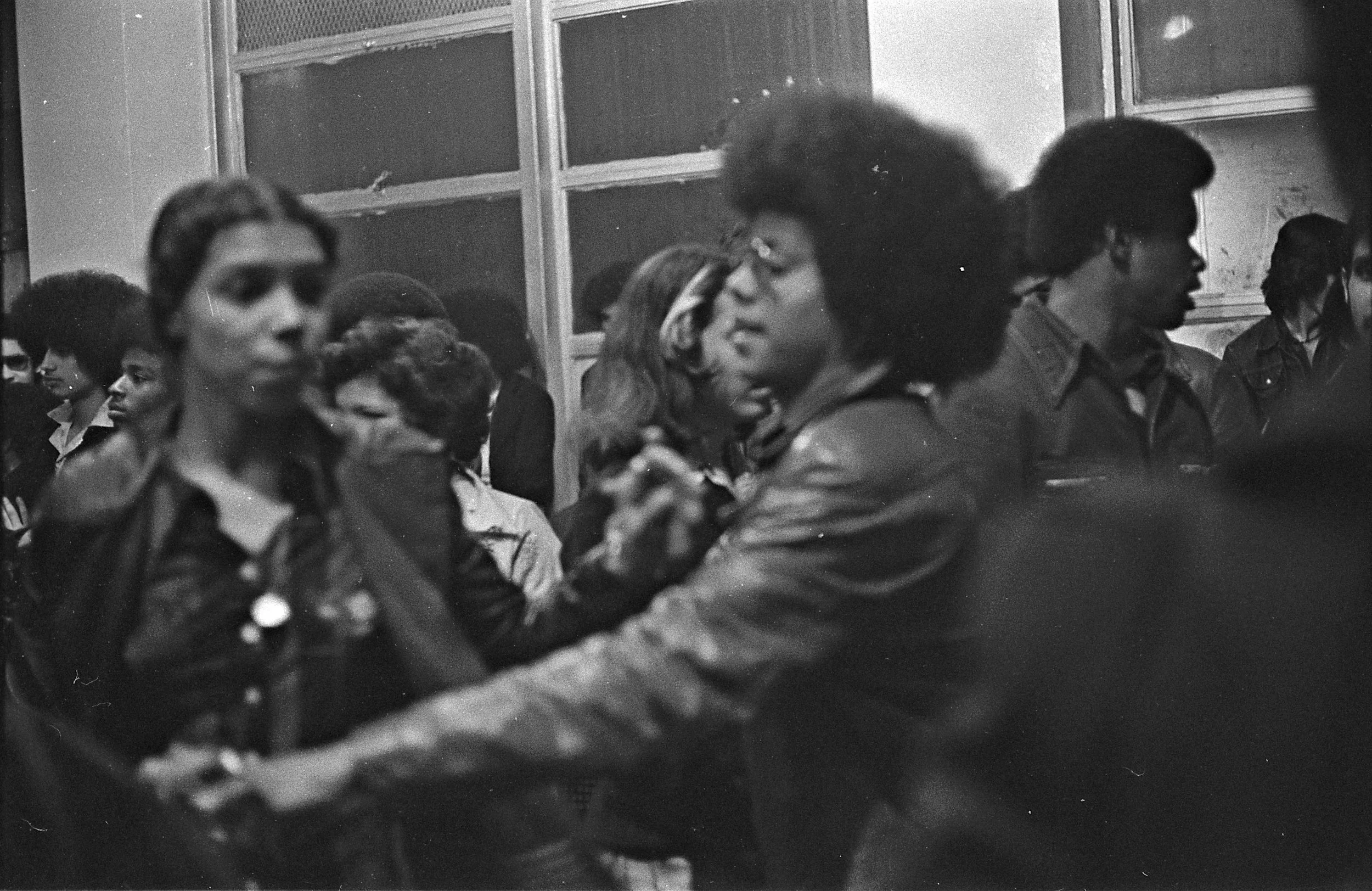
Above: Dancers Willie Whip and Norma at a Hustle jam at St. Mary’s Recreation Center, c.1974. Courtesy of Willie Estrada.
Characterized by rapid spins, sophisticated arm leads, and dramatic dips, Hustle was a display of swirling sophistication. Dancers dressed to impress in sleek polyester, high-waisted pants, and halter tops, transforming the floor into a scene of fierce but graceful style competition. Propelled by songs like Van McCoy’s 1975 hit “The Hustle,” the dance had already conquered New York’s club scene by the mid-1970s, just in time for the full-blown emergence of Disco—expressed classically by the release of Saturday Night Fever (1977)—and establishing The Bronx’s command of a polished, theatrical stage even as rawer forms evolved nearby.
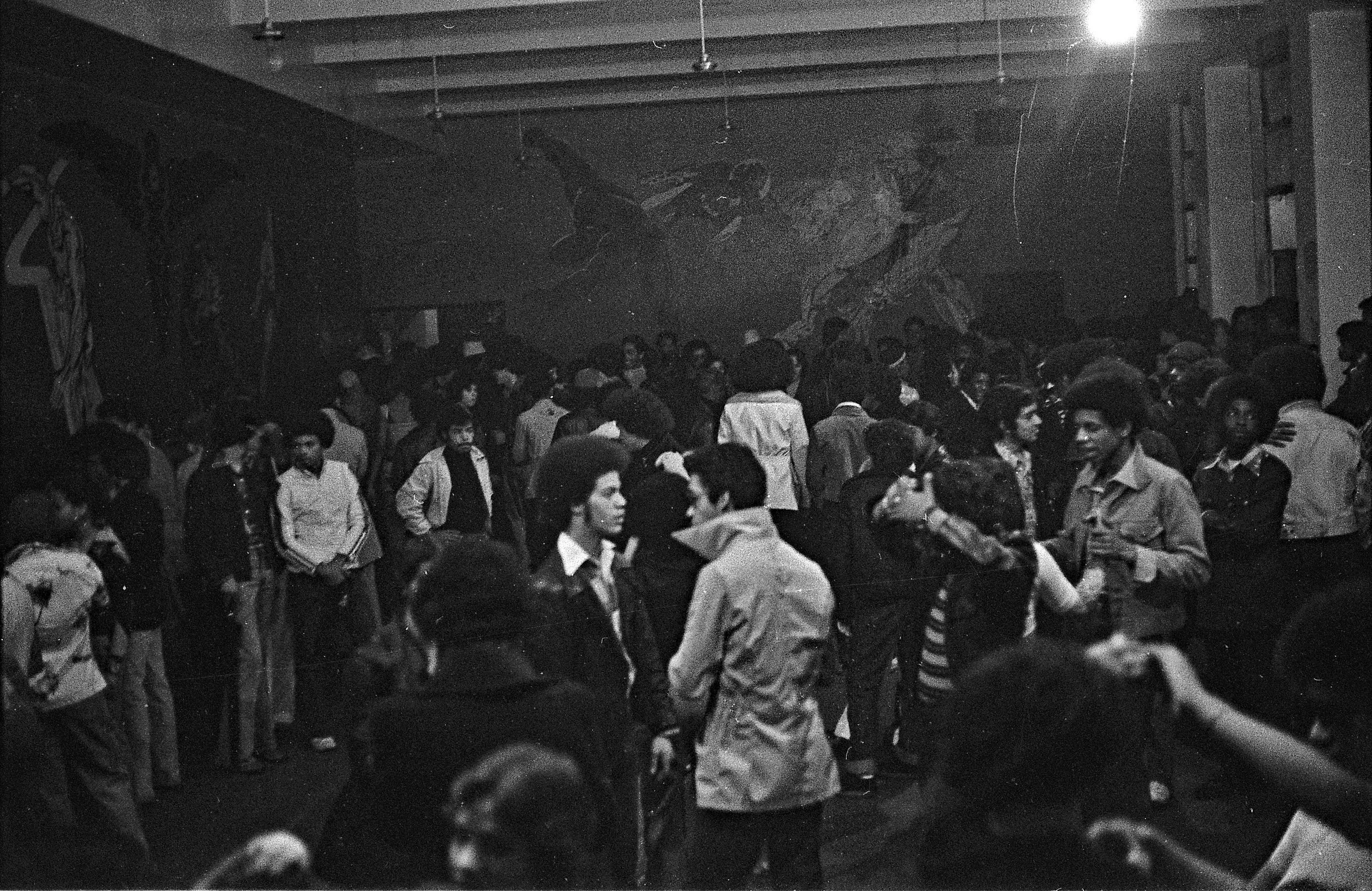
Hustle Jams at St. Mary's Rec Center, c. 1974–75. Courtesy of Willie Estrada.
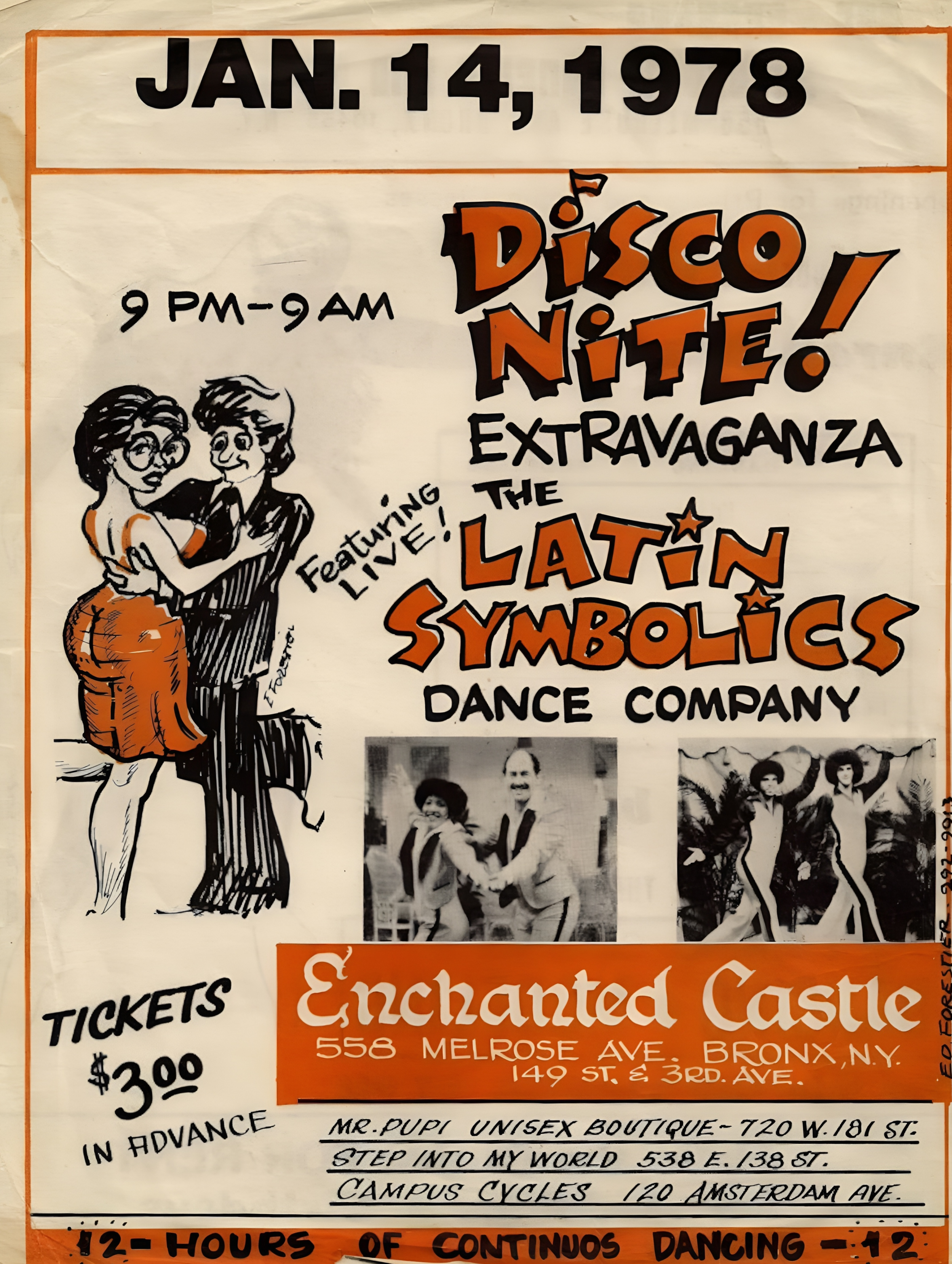
Flyer for Disco Nite! featuring The Latin Symbolics at the Enchanted Castle in The Bronx. Courtesy of Willie Estrada.
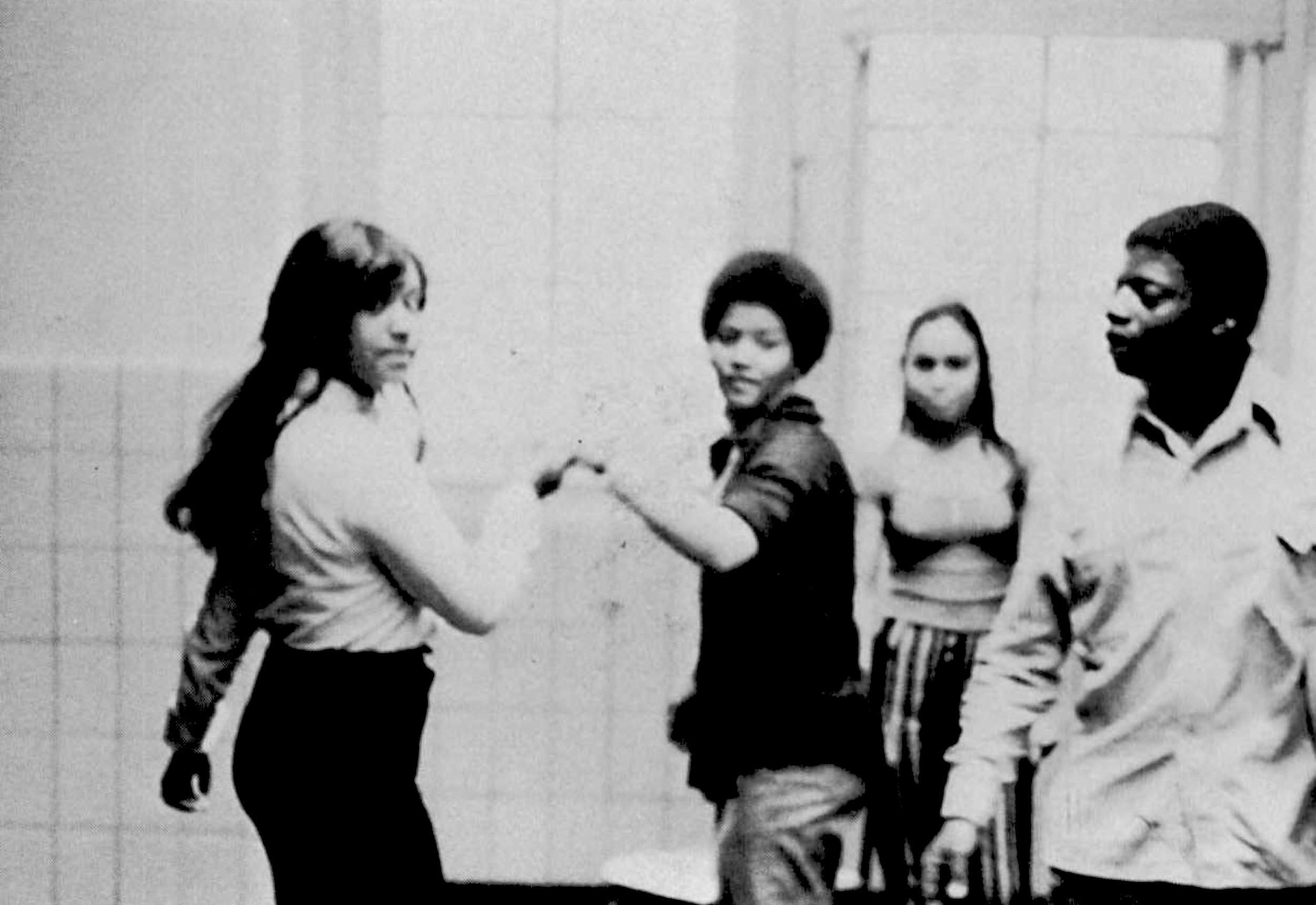
Teenagers practicing the Hustle at Morris High School, 1975. The Bronx County Historical Society Collections.
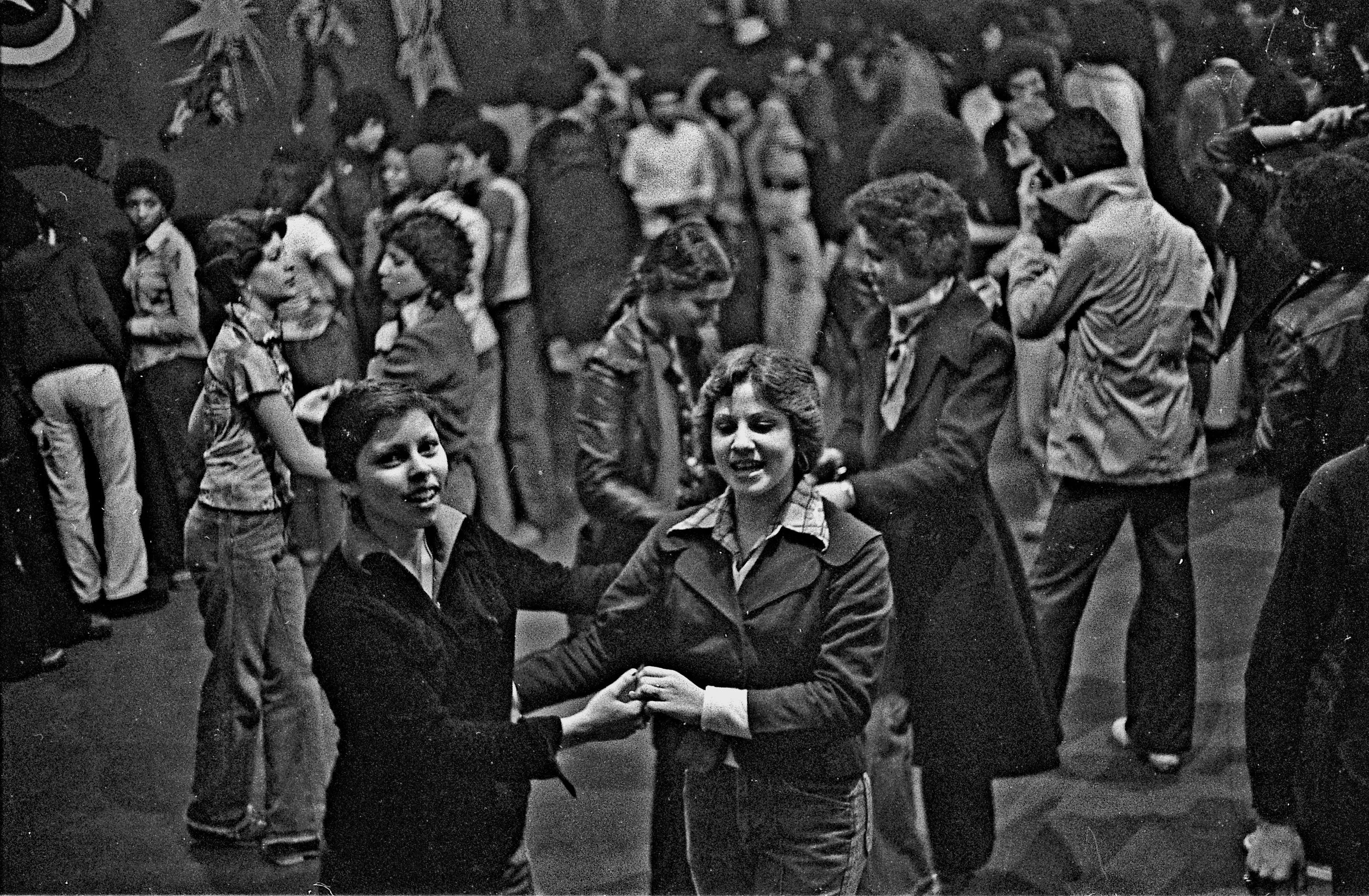
Girls dancing the Hustle at St. Mary's Rec Center, c.1974–75. Courtesy of Willie Estrada.